Powerful Truth: Discipline vs Discipleship Parenting
Are you correcting behavior or shaping hearts? Discover the difference between discipline and discipleship in Christian parenting—and why it matters.
The Tension Every Christian Parent Feels
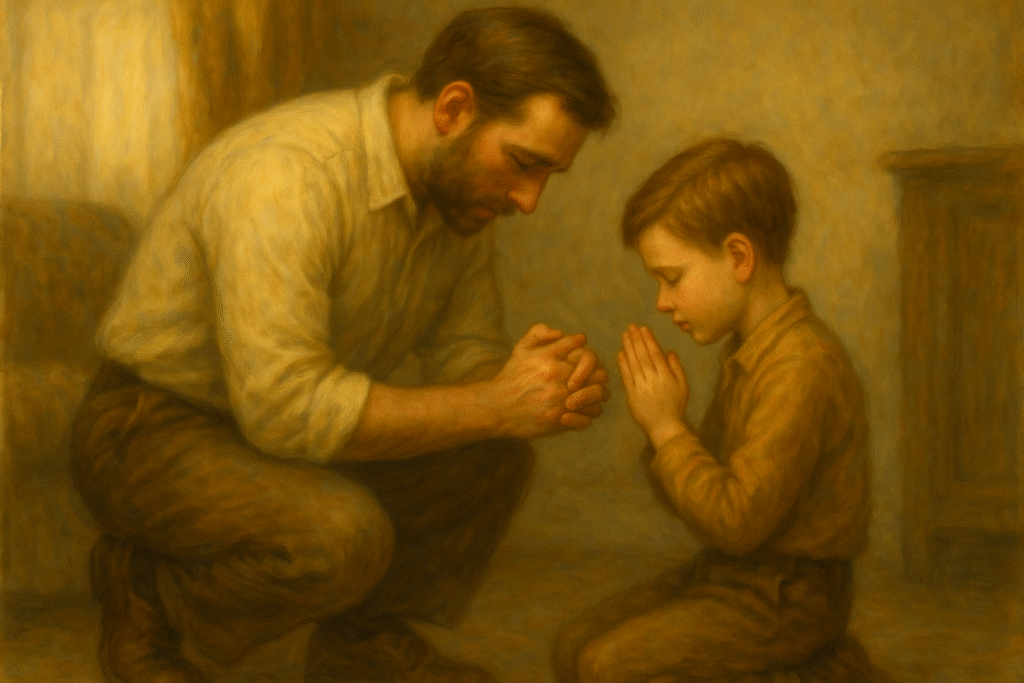
It’s bedtime. Your child is defiant—for the third time tonight. You’re exhausted. Your instinct is to issue a quick punishment and move on. But a deeper question lingers: Am I just correcting behavior, or am I shaping their heart toward Christ?
Many Christian parents live in the tension between discipline and discipleship, often unsure where one ends and the other begins. The world says, “Control the behavior.” Scripture says, “Train up a child in the way they should go” (Proverbs 22:6).
The difference isn’t just in method—it’s in mission.
What Is Discipline? (And What It’s Not)
Discipline, biblically understood, is not about punishment—it’s about guidance. It comes from the root word “disciple,” which means learner or follower.
Hebrews 12:11 tells us,
“No discipline seems pleasant at the time, but painful. Later on, however, it produces a harvest of righteousness and peace for those who have been trained by it.” (NIV)
Discipline is not:
- About parental control or venting anger
- Focused solely on outward compliance
- Based on fear or shame
Discipline is:
- Loving correction that points children to truth
- Rooted in relationship, not rules
- Concerned with why a child disobeyed, not just what they did
It addresses behavior, yes—but always with the goal of transformation, not conformity.
What Is Discipleship? (And Why It Matters More Than We Think)
Discipleship is the lifelong process of helping your child follow Jesus—not just obey your house rules. It’s what Jesus modeled with His followers: relationship, teaching, correction, encouragement, and grace.
Deuteronomy 6:6–7 makes this parental calling clear:
“These commandments… are to be on your hearts. Impress them on your children. Talk about them when you sit at home… when you walk along the road…” (NIV)
Discipleship means:
- Teaching God’s Word daily—not just on Sundays
- Modeling faith in real-life situations
- Guiding children to see sin as separation from God, not just a mistake
- Offering grace, forgiveness, and prayer alongside correction
In short, it’s shaping a child’s heart to love and follow Christ—not just behave.
Discipline vs. Discipleship: 4 Key Differences
1. Goal: Behavior Change vs. Heart Transformation
- Discipline alone aims for good behavior.
- Discipleship aims for heart-level change and a desire to please God.
Ask yourself: Am I more concerned with how my child looks on the outside—or who they’re becoming on the inside?
2. Motivation: Fear of Consequences vs. Love for Christ
- Behavior correction says: “Don’t do that, or you’ll get in trouble.”
- Discipleship says: “God calls us to something better. Let’s talk about why this matters to Him.”
Use John 14:15:
“If you love me, keep my commands.” (NIV)
Obedience flows from love, not fear.
3. Method: Quick Punishment vs. Intentional Teaching
- Discipline reacts. Discipleship responds.
- Take time to ask: Why did you make that choice? What does God say about it? How can we make it right?
Use each failure as a discipleship moment—help your child see sin, grace, and repentance as part of their journey.
4. Outcome: Temporary Compliance vs. Lifelong Faith
- Behavior-based parenting can produce well-mannered kids who don’t love Jesus.
- Discipleship may be slower—but it grows roots that last.
Psalm 1:2–3 paints the picture of a child who delights in God’s law:
“That person is like a tree planted by streams of water, which yields its fruit in season…” (NIV)
Faithful discipleship builds children who thrive in every season—not just when you’re watching.
Practical Ways to Shift from Discipline to Discipleship
Here are some ways to realign your parenting with the heart of God:
- Pray before you correct: Ask the Holy Spirit for wisdom and calm.
- Use Scripture as your guide: Correct with truth, not frustration.
- Follow discipline with discipleship: After consequences, talk about God’s grace, forgiveness, and purpose.
- Confess your own failures: Let your children see that even parents need Jesus.
- Create rhythms of discipleship: Devotions, family worship, and heart-to-heart talks are vital.
Final Encouragement: You Are Raising Disciples, Not Just Children
Parenting is hard. Discipling your children is even harder—but it’s also more rewarding. God didn’t call you to control your child’s behavior—He called you to shepherd their heart.
Don’t be discouraged by imperfection. Be faithful. Keep pointing your children to Jesus. Let your home be a place where both truth and grace are lived out daily.
As 3 John 1:4 says,
“I have no greater joy than to hear that my children are walking in the truth.” (NIV)
Want to Go Deeper?
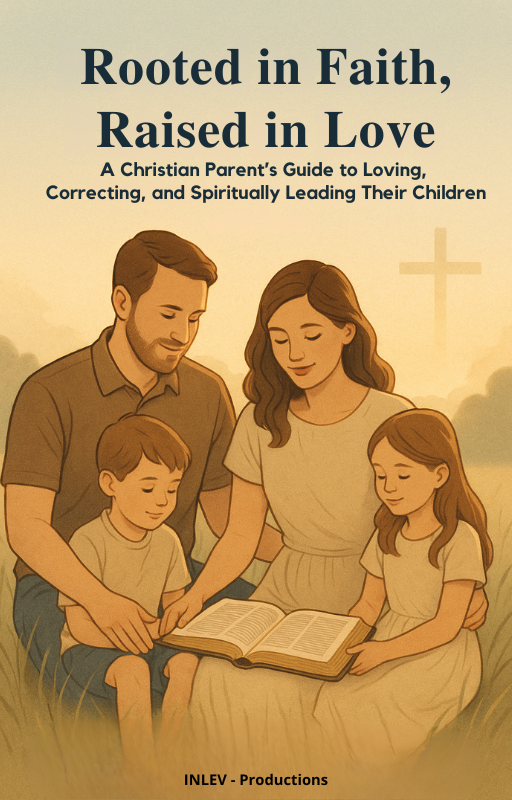
Download our free eBook: Rooted in Faith, Raised in Love—a practical and biblical resource for parents who want to build a home where discipleship, not just discipline, thrives.